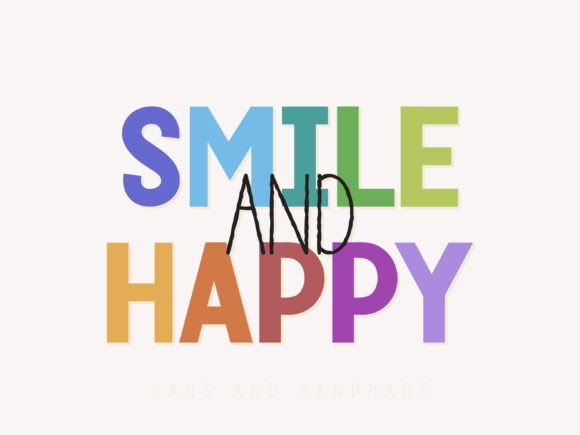
Smile and Happy: A Handwritten Font for Modern Web Design
In the world of digital product creation, the choice of typography is rarely just about aesthetics; it is a functional decision that dictates user experience, brand perception, and conversion rates. As web designers and UI specialists, we constantly search for typefaces that balance personality with performance. Enter Smile and Happy, a stylish and elegant handwritten font from the Script Amp collection that brings a distinct human touch to digital interfaces. This typeface is not merely decorative; it is a strategic asset for creating warm, approachable, and memorable online experiences.
The Digital Personality of Smile and Happy
At first glance, Smile and Happy presents itself as a fluid, organic script that mimics the natural flow of pen on paper. Its visual characteristics are defined by smooth curves, consistent stroke weight, and an inviting rhythm that feels personal rather than mechanical. For a web designer, this translates to immediate emotional resonance. Unlike rigid geometric sans serif fonts or formal serif fonts, a handwritten font like this one breaks the monotony of standard corporate layouts. It introduces warmth, suggesting authenticity and craftsmanship—qualities that are increasingly valued in a digital landscape saturated with automated content.
The elegance of Smile and Happy lies in its restraint. It avoids excessive flourishes that can clutter small screens, making it surprisingly versatile for modern web design. Whether you are designing a landing page for a boutique online store or a course sales page for a coaching business, this font serves as a visual cue for quality and care. It signals to the visitor that the brand behind the screen values detail and personal connection.
Strategic Placement in Web Layouts
One of the most critical aspects of using a display font or script font on the web is knowing where to place it to maximize impact without sacrificing readability. Smile and Happy excels as a headline font. It is perfectly suited for hero sections, where large text sizes allow its character details to shine. When used in a hero banner, it can anchor the visual hierarchy, drawing the eye immediately to the core message of the page.
Beyond the hero section, this font adds significant value to specific interface elements:
- Call-to-Action Areas: Using Smile and Happy for short phrases within buttons or near call-to-action (CTA) links can soften the request, making it feel more like an invitation than a command.
- Section Headers: For creative portfolios or blog sites, using this font for H2 or H3 tags creates a clear visual break while maintaining a cohesive narrative tone.
- Digital Assets: It is ideal for overlay text on image-heavy backgrounds, such as social media graphics, email newsletter headers, or promotional banners for handmade projects.
However, caution is required. Because it is a script font, it should generally be avoided for body copy. The complex letterforms can reduce scanning speed and cause eye strain for readers navigating long articles or detailed product descriptions. Instead, reserve Smile and Happy for supporting typography, decorative accents, and logo design applications where brevity is key.
Enhancing Brand Tone and Trust
Brand identity is built on consistency and tone. Smile and Happy supports brands that wish to appear friendly, creative, and accessible. For SaaS founders in the wellness or lifestyle space, or for creative entrepreneurs selling digital templates, this font helps establish an editorial design style that feels curated rather than generic. It elevates the perceived value of the product by associating it with artisanal quality.
When integrated into a comprehensive brand kit, this font can unify various touchpoints. From the website’s main navigation to the thank-you cards sent after a purchase, the consistent use of a handwritten typeface reinforces brand recognition. In e-commerce, this consistency builds trust. Customers are more likely to engage with a store that feels personally crafted, and typography plays a pivotal role in conveying that sentiment.
Font Pairing for Web Readability
To leverage the full potential of Smile and Happy, effective font pairing is essential. The golden rule of web typography is contrast. Since Smile and Happy is highly decorative, it pairs beautifully with simple, neutral typefaces that provide stability.
A classic and effective combination is pairing this script with a clean sans serif font for body text. The sans serif provides the necessary legibility for paragraphs, forms, and technical details, while the script handles the emotional heavy lifting of headlines. Alternatively, for a more sophisticated or editorial digital identity, you might pair it with a traditional serif font. This combination works exceptionally well for luxury goods, high-end photography portfolios, or premium digital products.
When testing these pairings, always consider responsive layouts. On mobile screens, where space is limited, ensure that the contrast between the header and body text remains sharp. A lightweight version of the script paired with a medium-weight sans serif often yields the best results for small devices.
Technical Considerations and Licensing
Before implementing Smile and Happy in your next project, it is important to review the technical specifications provided by Script Amp. Check for included styles, weights, and alternates. Some handwritten fonts offer ligatures or alternative characters that can enhance the visual flow of short phrases. Additionally, verify webfont availability. Ensuring the font is properly formatted for web delivery (WOFF/WOFF2) guarantees fast load times and consistent rendering across different browsers.
Multilingual support is another factor to consider if your audience is global. While many modern typefaces include extended language support, it is wise to confirm that the necessary diacritics and special characters are included to maintain typographic integrity across different languages.
Licensing is perhaps the most crucial practical note for professional designers. Always adhere to commercial font licensing agreements. Using Smile and Happy for client projects, online stores, and digital templates requires the appropriate license. Proper licensing protects both you and the foundry, ensuring that your use of the font is legal and ethical. This is particularly relevant when embedding fonts in PDFs, apps, or extensive web domains.
Practical Application Examples
Imagine a creative portfolio site where the designer uses Smile and Happy for the main name title and section dividers. The rest of the site relies on a minimalist sans serif, allowing the work to speak for itself while the typography adds a layer of personal branding. Or consider a coaching website that uses the font for motivational quotes and testimonial headers. The handwritten style makes the testimonials feel like personal notes from real people, increasing engagement and relatability.
Similarly, for a digital ad campaign promoting a new course, Smile and Happy can be used in the primary graphic to grab attention amidst a feed of standard text-based ads. Its unique shape stands out, encouraging clicks and driving traffic to the landing page.
In conclusion, Smile and Happy is more than just a pretty font; it is a tool for communication. By understanding its strengths as a display font and respecting its limitations regarding body text, web designers and digital creators can harness its power to create websites that are not only visually stunning but also emotionally engaging and commercially effective. When used with intention, it transforms digital spaces into welcoming environments that resonate with users on a human level.